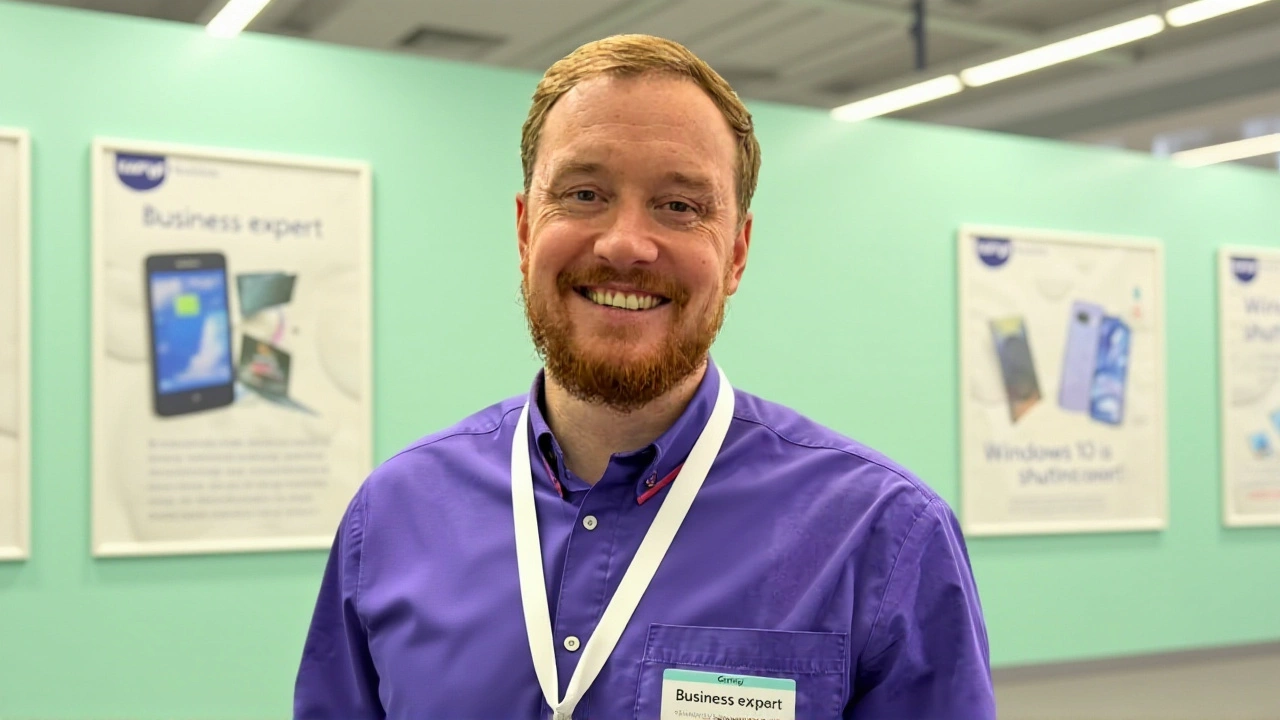
On August 11, 2025, Currys PLC didn’t just rename a division — it announced a full-scale takeover of the UK’s small business tech market. The London-based electronics retailer, better known for selling TVs and laptops to households, quietly transformed its under-the-radar B2B arm into Currys Business, complete with 57 dedicated hubs across the country and a plan to add three more before Christmas. The move comes after adding 75,000 new business customers in just 12 months — a signal that small firms aren’t just buying tech online anymore. They want someone to show up, set it up, and explain it — preferably with a coffee in hand.
From Online Orders to Onsite Installations
It’s not just about pricing anymore. Small businesses in Stevenage, Solihull, and Exeter now walk into dedicated Currys Business zones inside existing stores and find specialists who know how to configure networked printers, deploy secure cloud backups, or set up AI-powered security cameras — not just push a credit card through a terminal. Chris Williams, Director of Currys Business, says the shift isn’t accidental. "We’re seeing growing demand from small businesses who need and want far more than just online ordering," he said. "They’re drowning in cost pressures. What they need is a partner who’s been doing this for 30 years."
That longevity matters. While Amazon and Alibaba offer speed, Currys offers presence. For a bakery in Exeter needing a new POS system, having a technician arrive within 24 hours — not a chatbot — can mean the difference between a smooth lunch rush and a 90-minute outage. Currys Business now offers 30-day payment terms, exclusive SME pricing, and bundled IT support packages that include device recycling and cybersecurity audits. It’s retail meets managed services — and it’s working.
AI Isn’t Just a Buzzword — It’s a £78 Billion Opportunity
Behind the hub expansions is a quiet but massive bet: that generative AI will become as essential to small businesses as electricity. According to May 2025 research cited by Currys, accelerating AI adoption among the UK’s 5.5 million SMEs could unlock £78.1 billion in productivity gains by 2035. That’s not theoretical. One Currys Business client in Solihull, a mid-sized logistics firm, cut its invoice processing time by 68% using AI-powered document scanning tools sold and installed through the hub. "We didn’t know where to start," said owner Priya Mehta. "Currys didn’t just sell us the software. They walked us through it. For two weeks, their team was here every morning. That’s not Amazon."
Currys is training its 1,200+ B2B advisors to become AI translators — helping SMEs understand what tools actually solve their problems, not just what’s trending on LinkedIn. The company’s own internal data shows that businesses using AI-enabled tech through Currys Business have a 42% higher retention rate than those buying standalone hardware.

Financial Strength Amid Headwinds
None of this would be possible without solid finances. Despite a £32 million ($40 million) wage bill increase triggered by Chancellor Rachel Reeves’ 2024 autumn budget, Currys PLC expects adjusted profit before tax of £145–£155 million ($181–$194 million) for the 2024/25 financial year — a 23–31% jump from the prior year. That’s ahead of analyst expectations of £140 million. The Nordics division, which accounts for 40% of revenue, posted a 2% like-for-like sales rise in early 2025, driven by demand for robotic vacuums and AI-powered computing gear.
Even more telling: Currys PLC announced a £50 million share buyback program — to be executed by Panmure Liberum and ending no later than April 30, 2026. That’s not a panic move. It’s a confidence play. The company expects to end the year with at least £100 million in net cash after pension contributions and capital returns. "We’re confident that profit margins will step forward again this year," said Group Chief Executive Alex Baldock.
What’s Next? The AGM and the AI Roadmap
On September 4, 2025, Currys PLC’s Annual General Meeting will take place at BFI Southbank in London. Investors will get the full 2024/25 Annual Report, which lists 12 principal risks — down from 13 last year. Notably, competition has been elevated to its own category, signaling that Currys sees rivals like John Lewis and TechData as direct threats in the B2B space. Cybersecurity is also under intense review, with internal teams working alongside the National Cyber Security Centre after recent retail breaches.
Meanwhile, Currys is pushing hard on recurring revenue: targeting 2.5 million iD Mobile subscribers by year-end and aiming for a 3% adjusted EBIT margin in both UK&I and Nordics markets. Hybrid work isn’t fading — it’s evolving. Demand for home office tech remains steady, while smart home integrations are now being bundled into business packages for remote teams. "We’re not just selling gadgets," said Williams. "We’re selling stability."

Why This Matters
This isn’t just about Currys. It’s about what happens when a high-street giant realizes that small businesses aren’t just customers — they’re the backbone of local economies. With 5.5 million SMEs in the UK, many still using 10-year-old software, Currys Business is stepping into a vacuum. Competitors are slow to respond. Online-only vendors can’t offer onsite support. Big-box tech resellers charge too much. Currys has the scale, the physical presence, and now, the strategy. The question isn’t whether SMEs will adopt — it’s whether they’ll choose Currys first.
Frequently Asked Questions
How is Currys Business different from buying tech online?
Currys Business offers personalized consultations, 30-day payment terms, and onsite IT installation — something online retailers simply can’t match. Each of its 57 hubs has trained advisors who help SMEs choose, install, and maintain tech like AI tools, security systems, and networked printers. For small businesses, this means less downtime and fewer IT headaches.
Why is AI so important for small businesses right now?
May 2025 research cited by Currys estimates AI adoption could unlock £78.1 billion in productivity gains across UK SMEs by 2035. Tools like automated invoicing, AI-driven customer service chatbots, and predictive inventory systems help small firms do more with less staff — critical as wage costs rise and labor shortages persist.
What’s the financial outlook for Currys PLC in 2025?
Currys expects adjusted pre-tax profit of £145–£155 million for 2024/25 — up 23–31% year-on-year — and targets £170 million for 2025/26. It’s also executing a £50 million share buyback through April 2026 and expects to end the year with at least £100 million in net cash. Its Nordics division is growing, and iD Mobile is on track to hit 2.5 million subscribers.
Are Currys Business hubs available everywhere in the UK?
Not yet. Currys currently operates 57 hubs, with three added in July 2025 in Stevenage, Solihull, and Exeter. Three more are planned before December 2025, focusing on underserved regions. The goal is nationwide coverage by 2026, prioritizing areas with high concentrations of SMEs — not just major cities.
How has Currys responded to cybersecurity risks?
Following recent retail cyberattacks, Currys has reassessed its business continuity risk and is now working directly with the UK’s National Cyber Security Centre. Internal monitoring has been strengthened, and new protocols require all business hub devices to meet enhanced security standards before deployment. SME clients are also offered free cybersecurity health checks with tech purchases.
Why did Currys rebrand its B2B division now?
The rebrand to Currys Business in August 2025 followed explosive growth — 75,000 new business customers in one year — and a clear gap in the market. SMEs wanted more than e-commerce: they needed trusted, local support. The timing aligns with rising AI adoption, increased cost pressures, and hybrid work trends — all of which make Currys’ omnichannel model uniquely positioned to win.